The 520 Chain Conversion: What Actually Changes
Updated July 2026The pitch math behind a 520 conversion, the real difference between X-ring and O-ring sealing, and D.I.D’s own word on rivet versus clip master links.
The pitch math, stripped of marketing
520, 525, and 530 chains all share the same 5/8-inch pitch — the distance between pin centers — and differ only in roller width and pin diameter, which is why they carry different load ratings (JT Sprockets Application Guide 2024). A “520 conversion” on a bike that came stock with 525 or 530 swaps to the narrower, lighter chain and a matching set of sprockets — it’s not a different pitch, just a lighter build of the same geometry. Because it’s rotating unsprung mass at the wheel, the weight saved matters more per gram than most other places on the bike.
What you actually gain — and what you give up
The upside is real but modest: less rotating mass at the wheel, which most riders feel as marginally quicker direction changes and throttle response rather than a dramatic power gain. Aluminum sprockets (commonly 7075-grade) run roughly 66% lighter than steel, which is most of the conversion’s actual benefit — the chain itself is a smaller factor. The trade-off is wear life: a narrower chain and softer aluminum rear sprocket wear faster than the stock steel setup, especially in track or aggressive-street use. Hybrid options exist — Supersprox Stealth sprockets pair an aluminum carrier with steel sprocket teeth and last roughly 3× as long as a pure-aluminum sprocket, at a weight and cost between the two extremes.
X-ring vs. O-ring: the sealing technology that actually matters
Whichever pitch you run, the sealing type does more for longevity than the pitch choice itself. O-ring chains use a circular rubber seal between the plates to hold in lubricant and keep out dirt; X-ring chains use a cross-section-shaped seal that presents less surface contact against the plates, cutting friction while sealing just as well or better (D.I.D’s own X-ring vs. O-ring explainer). RK’s own service-life figures illustrate the gap plainly: a sealed chain runs roughly 20,000 miles versus roughly 3,000 for a non-sealed chain under comparable use. If you’re replacing a chain at all, sealing type is the decision that changes your maintenance schedule the most — replace both sprockets at the same time regardless.
Folklore correction: “race teams run unsealed chains”
This one is half-true, and the half that’s missing matters. Unsealed chains are genuinely common in off-road racing — D.I.D’s own 520ERT3 is a motocross-specific unsealed chain, where light weight and mud clearance outweigh sealed longevity over a short race. Road racing runs the opposite way: D.I.D’s 520ERV7 sealed X-ring chain is what actually runs in MotoGP and WSBK paddocks. “Race teams run unsealed” is true for motocross and false for road racing — it’s not a blanket statement about racing in general, and citing it to justify skipping a seal on a street or track bike misapplies a dirt-bike fact to a road bike.
Master links: rivet or clip, and why it’s not a displacement rule
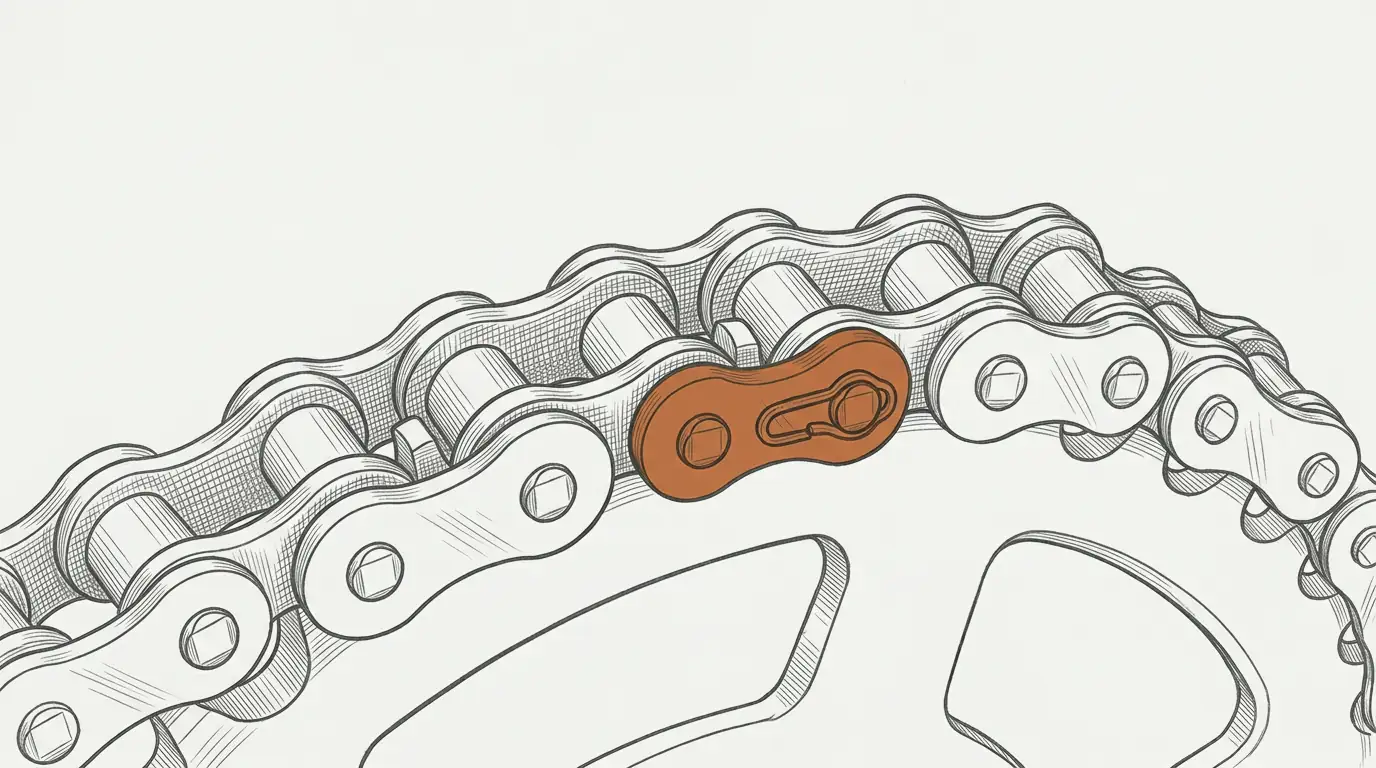
D.I.D’s own FAQ describes three connecting-link types — RJ (loose clip, typically shipped with non-sealed chains), FJ (press-fit clip, typically shipped with sealed chain), and ZJ (rivet-style, pin heads peened in place with a dedicated tool) — and states plainly that ZJ rivet-type links are strongly recommended for sealed chains. That’s the manufacturer’s own hierarchy, not a displacement-based rule. A persistent forum claim holds that clip links are “banned over 500cc” — no manufacturer publishes any such cc cutoff. The actual guidance is about chain type (sealed vs. non-sealed) and riding context (street vs. off-road), not engine size.
Questions riders ask
Will I actually feel a difference after a 520 conversion?
Most riders describe it as a subtle improvement in how quickly the bike changes direction and how immediate throttle response feels — the unsprung-mass reduction is real but modest. It’s not a horsepower upgrade; think of it as a refinement on top of an already-good chassis, most noticeable on track.
Is a clip master link actually unsafe above 500cc?
No manufacturer publishes an engine-displacement cutoff for clip links — that specific number doesn’t exist in any spec sheet we could find. What D.I.D’s own documentation does say is to match the link type to the chain type: rivet-style ZJ links for sealed chains, regardless of what bike it’s on.
Rivet or clip for my sealed X-ring chain?
Rivet (D.I.D’s ZJ type) is the manufacturer’s stated recommendation for sealed chains, and it requires a dedicated riveting tool to install correctly — factor that into your DIY tool list before you commit to doing the swap yourself.